

Latest Scientific Research on Ayurvedic Herbs: Ancient Wisdom Meets Modern Science
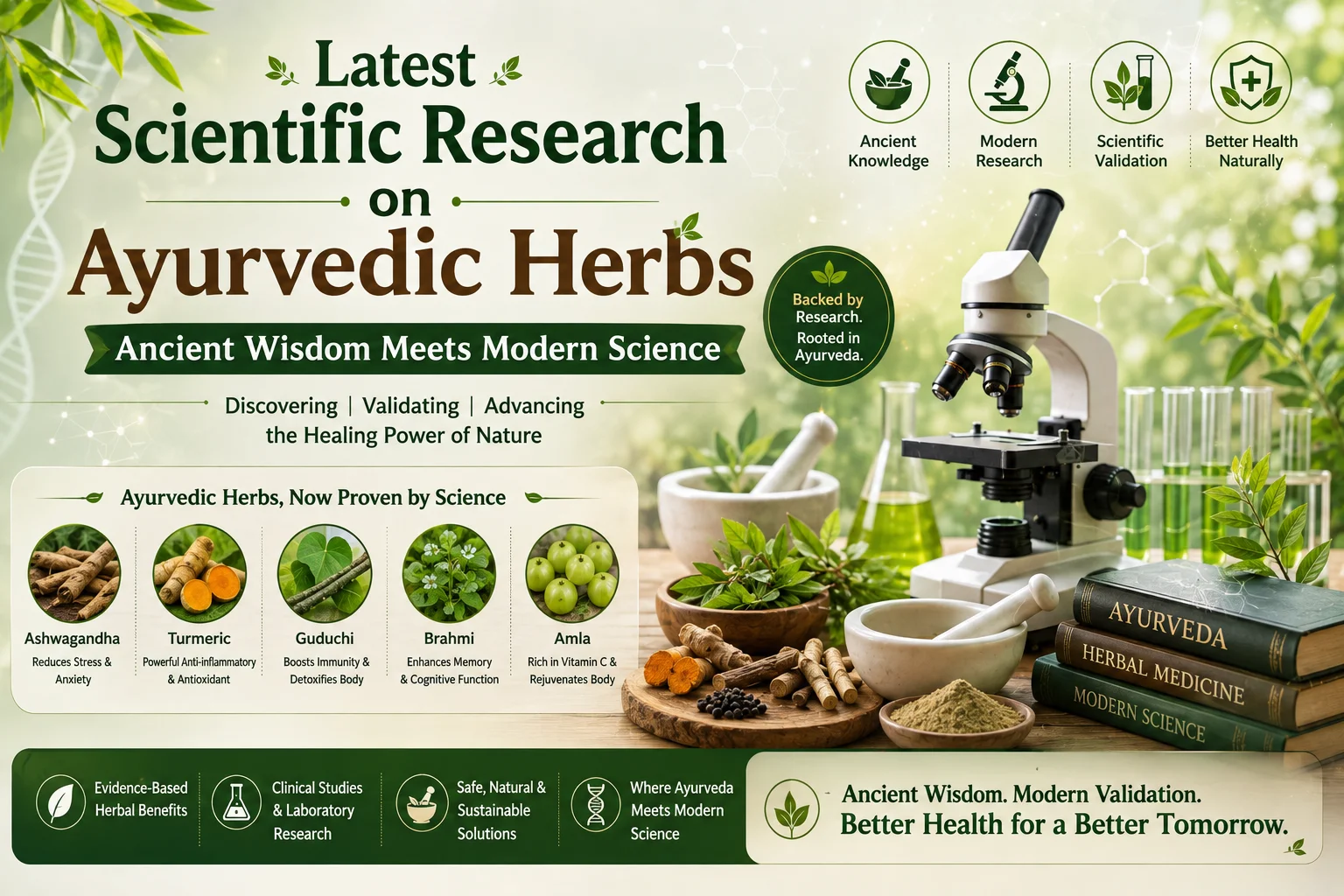
Latest Scientific Research on Ayurvedic Herbs: Ancient Wisdom Meets Modern Science
Ayurveda, one of the world's oldest systems of holistic healthcare, has used medicinal herbs for over 5,000 years to promote health and well-being. Today, these traditional herbs are gaining worldwide attention as researchers continue to investigate their therapeutic potential through modern scientific methods.
While Ayurveda has always emphasized prevention, balance, and natural healing, recent clinical studies are helping scientists understand how many Ayurvedic herbs may support immunity, stress management, metabolism, cognitive function, digestive health, and overall wellness. Although research is promising, experts agree that more large-scale human clinical trials are needed to confirm many of these findings.
Why Modern Science Is Studying Ayurvedic Herbs
Researchers are increasingly interested in Ayurveda because many medicinal plants contain naturally occurring bioactive compounds such as polyphenols, alkaloids, flavonoids, terpenoids, and antioxidants. These compounds are being studied for their ability to support the body's natural physiological functions.
1. Ashwagandha (Withania somnifera)
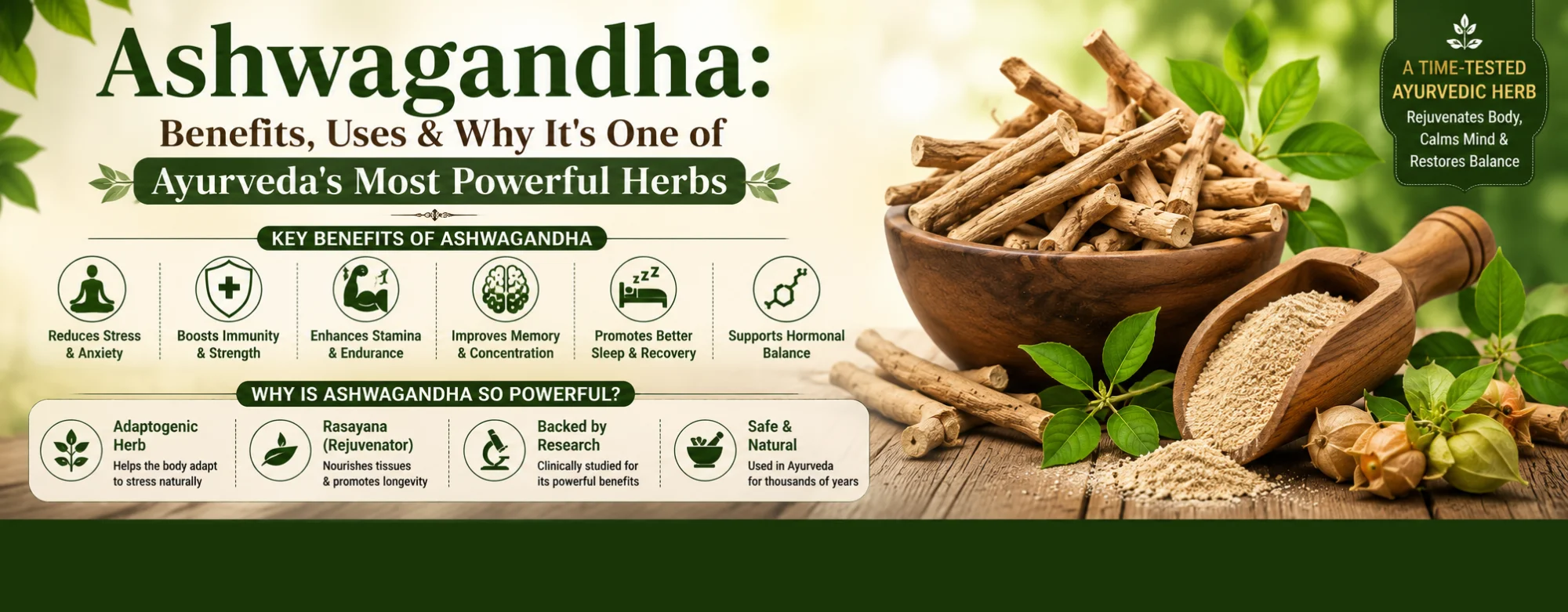
Ashwagandha is one of Ayurveda's most researched adaptogenic herbs. Modern clinical studies suggest it may help the body manage stress, improve sleep quality, reduce cortisol levels, and support physical performance.
Current Research Highlights
- Supports stress management.
- May improve sleep quality.
- Supports physical endurance.
- Research is ongoing regarding immune function and cognitive wellness.
2. Giloy (Tinospora cordifolia)
Giloy has traditionally been used in Ayurveda as a Rasayana herb for supporting overall wellness. Researchers continue to study its antioxidant and immunomodulatory properties.
Current Research Highlights
- Supports immune wellness.
- Rich in natural antioxidants.
- Research is exploring its role in metabolic health.
Important: Excessive or unsupervised use of herbal supplements may not be suitable for everyone. Always consult a qualified healthcare professional.
3. Turmeric (Curcuma longa)
Turmeric contains curcumin, one of the most extensively researched plant compounds in the world.
Current Research Highlights
- Powerful antioxidant properties.
- Supports healthy inflammatory response.
- Being studied for joint and metabolic wellness.
4. Amla (Indian Gooseberry)
Amla is naturally rich in Vitamin C and numerous antioxidant compounds.
Research Suggests
- Supports antioxidant protection.
- Supports healthy digestion.
- May contribute to healthy cholesterol and glucose metabolism.
5. Brahmi (Bacopa monnieri)
Brahmi has been traditionally used to promote memory and mental clarity.
Scientific Studies Are Exploring
- Memory support.
- Learning and concentration.
- Cognitive performance.
6. Shatavari (Asparagus racemosus)
Known as one of Ayurveda's most respected herbs for women's wellness, Shatavari continues to be studied for its adaptogenic and antioxidant properties.
- Supports women's wellness.
- Supports overall vitality.
- Traditionally used for reproductive health.
7. Neem (Azadirachta indica)
Neem has been used in Ayurveda for centuries for skin wellness and overall health.
- Supports skin wellness.
- Rich in antioxidant compounds.
- Traditionally used for natural cleansing.
8. Triphala
Triphala is a combination of Haritaki, Bibhitaki, and Amla and remains one of Ayurveda's most widely used formulations.
Research Focus
- Gut microbiome.
- Digestive wellness.
- Natural antioxidant support.
Emerging Technologies in Ayurvedic Research
Scientists are now combining Artificial Intelligence (AI), Network Pharmacology, Molecular Docking, and Systems Biology to understand how Ayurvedic herbal formulations work. Unlike conventional medicines that often target a single pathway, Ayurvedic formulations are believed to work through multiple biological pathways simultaneously.
Why Holistic Wellness Still Matters
Modern research continues to reinforce one of Ayurveda's core principles—that health depends on balance. Along with herbs, Ayurveda emphasizes healthy nutrition, quality sleep, physical activity, stress management, seasonal routines, and mental well-being.
The Future of Ayurveda
As scientific interest grows, Ayurveda is becoming increasingly integrated into global wellness discussions. Researchers continue to investigate traditional herbs using modern technology, helping bridge ancient wisdom with evidence-based healthcare. While many findings are encouraging, continued research is essential to better understand their safety, effectiveness, and long-term benefits.
Final Thoughts
The growing body of scientific research demonstrates that Ayurvedic herbs remain highly relevant in today's wellness landscape. Herbs such as Ashwagandha, Giloy, Turmeric, Amla, Brahmi, Neem, Shatavari, and Triphala have shown promising potential in supporting overall health and wellness. However, these herbs should complement—not replace—professional medical care and a healthy lifestyle.
Disclaimer: This article is for educational purposes only and should not be considered medical advice. Although many Ayurvedic herbs have a long history of traditional use, ongoing scientific research continues to evaluate their safety and effectiveness. Always consult a qualified healthcare professional before using herbal supplements, especially if you have a medical condition, are pregnant, breastfeeding, or are taking prescription medications.
Related Posts

Recommended For You